




















Teacher turnover remains one of the most persistent challenges facing U.S. school systems. According to the National Center for Education Statistics (NCES)(1), the national average teacher turnover rate is approximately 12%, with school-level turnover reaching as high as 16% in many communities. These rates create significant academic, financial, and organizational strain: Students lose instructional continuity, districts spend millions annually on recruitment and training costs, and remaining educators face increased workloads that further fuel dissatisfaction.
The Learning Policy Institute (LPI) identifies two major drivers of teacher shortages:
1. A weakened teacher pipeline, with educator preparation program enrollment and completion at the lowest levels in decades, and
2. High rates of teacher attrition, driven by factors that extend beyond retirement.
While about one in five teachers who leave are retirees, the remaining departures—more than 75% of total attrition—stem from challenges that schools and districts can directly address. Educators increasingly identify the desire for higher salaries, interest in career changes, dissatisfaction with working conditions, inadequate professional learning opportunities, and limited career-growth pathways as key factors influencing their decisions to leave the profession. Because such a large portion of attrition is controllable, it presents a significant opportunity for district leaders and principals to strengthen retention through strategic, research-based investments.
Solving the Turnover Problem
One of the most powerful tools districts and schools can use to reduce turnover is a district-wide investment in accredited, graduate-degree-eligible courses offered by Teaching Channel. Formerly known as Learners Edge, Teaching Channel has delivered graduate online, self-paced courses to more than 400,000 teachers since 2000. Each course is designed using a proven professional learning model(3) grounded in research and approved by regionally accredited institutions of higher education including the American College of Education, Andrews University, and others, ensuring teachers receive official transcripts, letter grades, real-time feedback, and high-quality instructional development. Teaching Channel courses have received the ISTE Seal(4) by completing an extensive review process. Investing in teachers’ professional learning through graduate-degree-eligible courses can positively influence many of the key factors that drive teachers out of the profession.
To understand the relationship between Teaching Channel courses and turnover, we compared 21 districts across eight states with high concentrations of teachers completing accredited, graduate-eligible courses over the last three years (see Table 1). More than 95% of these districts reported lower teacher turnover rates than the national average, and 20 of the 21 districts outperformed their own state’s turnover rate. Although many factors influence a teacher’s decision to stay or leave, the strong and consistent outcomes across these districts demonstrate the critical role that access to high-quality instructional coursework can play in four key areas: teacher effectiveness, student engagement, job satisfaction, and long-term retention.
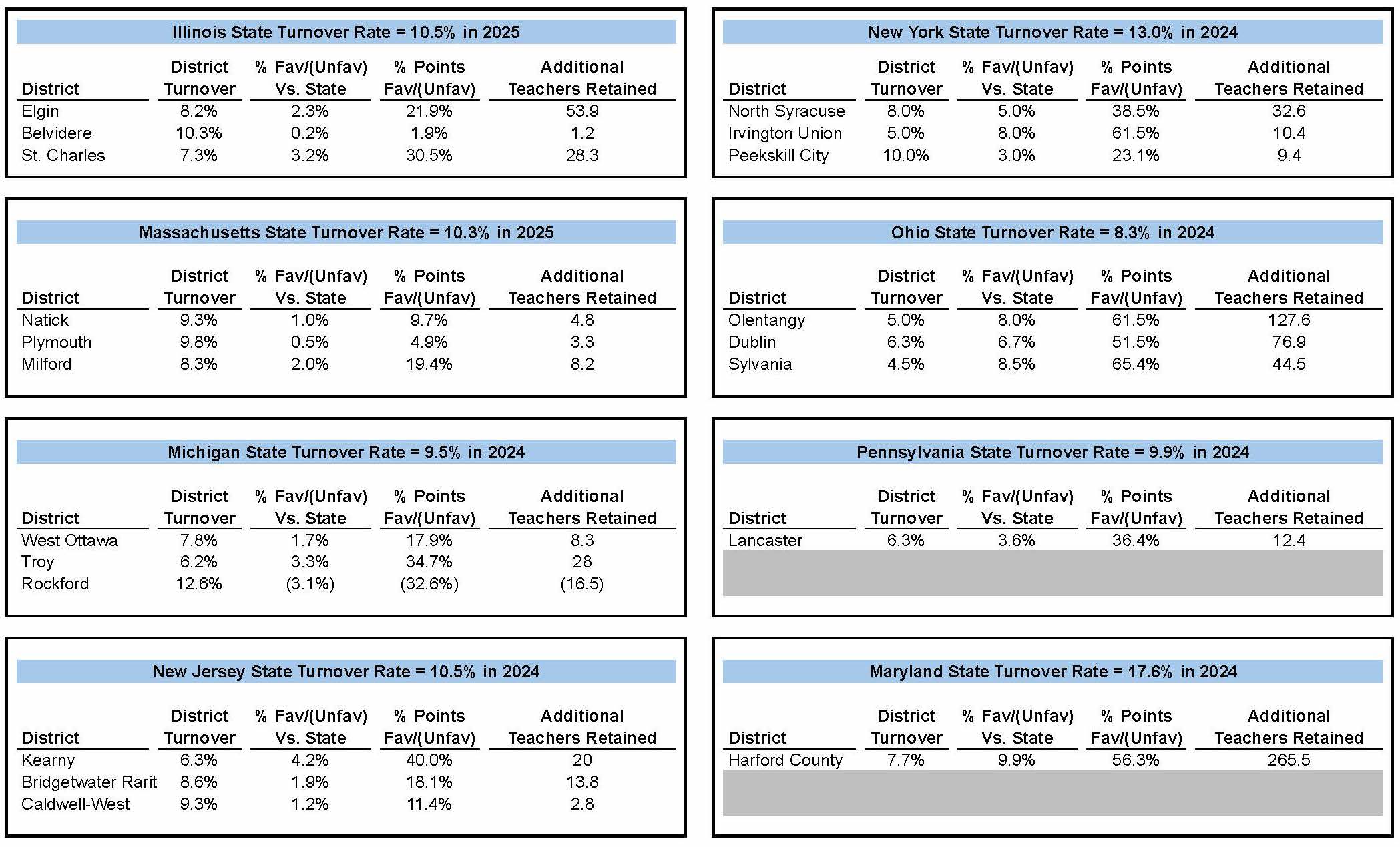
TABLE 1: 2024 District Turnover Rates vs. 2024 State Turnover Rates
Summary Findings: 95% of public school districts investing in graduate-degree-eligible courses retained more teachers and were able to avoid on average more than $495,000 in replacement costs for teachers in 2024 compared to their state’s published turnover rate in 2024. 15 of the 21 districts had a turnover rate that was 15% points or more favorable vs. their respective state’s turnover rate.
1. Teacher Effectiveness
Graduate-level learning improves instructional practice. Teachers who enroll in rigorous, content-rich degree-eligible coursework gain deeper expertise, new pedagogical approaches, and greater confidence in their craft. Teaching Channel’s courses focus on real challenges teachers face every day and provide actionable solutions educators can begin using immediately. This practical, application-oriented focus strengthens classroom instruction while enhancing teachers’ sense of professional efficacy, one of the strongest predictors of long-term retention. In a recent survey of more than 10,000 Teaching Channel active course learners, 81% reported already implementing a new teaching strategy prior to completing their course, and another 10% indicated they had identified and planned to introduce a new strategy.
2. Student Engagement
Effective professional learning boosts student engagement and achievement, creating a positive feedback loop. Professional learning that encourages active, inquiry-based teaching helps teachers design lessons where students do the thinking, creating, and problem-solving. When students are engaged and invested, classroom management becomes more proactive than reactive. Teachers spend less time redirecting behavior and more time teaching, a shift that reduces stress, increases daily joy, and ultimately supports long-term retention. As classroom management becomes easier and learning increases, teachers are far more likely to remain in their roles.
3. Job Satisfaction
What’s more, providing pathways to accredited graduate-degree-eligible credit signals to teachers that their district is genuinely investing in their long-term career growth. This investment strengthens loyalty, boosts job satisfaction, and provides meaningful pathways for advancement that addresses several of the most common reasons educators cite for departing. Additionally, expanding access to advanced graduate coursework helps districts strengthen their leadership pipeline, supporting the development of future principals, instructional coaches, and district-level leaders. When educators feel valued and supported, they are significantly more likely to stay.
4. Long-Term Retention
Finally, offering graduate-degree-eligible courses through strategic district partnerships is a cost-effective retention strategy. Research indicates that replacing a teacher can cost a district up to $25,000 in separation, recruiting, hiring, and onboarding expenses. In comparison, funding high-quality professional learning represents only a fraction of the cost and yields far more sustainable long-term benefits. In many states included in this analysis, teachers can also renew licenses or certifications and earn permanent salary advancement through successful completion of graduate coursework; in addition, some colleges and universities accept the transfer of up to nine degree-eligible credits towards approved master’s programs. This combination of meeting licensure requirements, pursuing advanced degrees, and earning higher pay is a powerful incentive that benefits teachers, students, and districts alike. Districts retain more effective educators, students benefit from improved instruction, and teachers gain meaningful professional growth and financial reward.
A Path Forward for Teacher Retention
The nation’s teacher turnover problem is real, but it is also solvable. By focusing on the controllable 75% of attrition and investing in accredited graduate-degree-eligible courses, districts can strengthen teacher practice, elevate student outcomes, and build the stable, high-quality educator workforce that every community deserves.
Table 1 Footnotes:
- Turnover is defined as the opposite to the retention rate, which is the percentage of teachers in the prior school year remaining at the district for the measured year.
- Favorable / unfavorable percentage is the difference in percentage between the selected district’s retention and the state average.
- Additional teachers retained is the percentage difference between the district and state averages, extrapolated onto the district’s teacher population.
- Cost per teacher replaced is calculated based on the Learning Policy Institute’s estimator tool: https://learningpolicyinstitute.org/product/2024-whats-cost-teacher-turnover.We estimated a per-teacher replacement cost at $18,500.
- Total teacher replacement cost is the cost per teacher replaced, multiplied by the additional teachers retained.
Table 1 Data Sources:
- National Center for Education Statistics
- Illinois Department of Education. “Illinois Report Card 2024-25.” https://www.illinoisreportcard.com/Default.aspx.
- Massachusetts Department of Elementary and Secondary Education. “School and District Profiles.” https://profiles.doe.mass.edu/statereport/staffingRetentionRates.aspx.
- Maryland State Department of Education. “Educator Workforce Data Update.” February 25, 2025. https://marylandpublicschools.org/stateboard/Documents/2025/0225/Educator-Workforce-Overview-A.pdf.
- Board of Education of Harford County. “Human Resources Informational Report – Recruitment and Retention for Period 10-16-23 through 10-15-24.” https://www.hcps.org/departments/docs/HumanResources/R&R_InformationalReport_23-24.pdf.
- New Jersey Department of Education. “Data Tables for New Jersey’s Current Teacher Workforce Landscape Report (2023). https://www.nj.gov/education/rpi/data_2023.shtml.
- New York State Education Department. “NY State – Student and Educator Report [2023 – 24].” https://data.nysed.gov/studenteducator.php?year=2024&state=yes.
- Ohio Department of Education & Workforce. “Ohio’s Teacher Workforce.” https://education.ohio.gov/Topics/Research-Evaluation-and-Advanced-Analytics/Data-Insights/Ohio-s-Teacher-Workforce.
- Ohio Department of Education & Workforce. “Ohio School Report Cards.” https://reportcard.education.ohio.gov.
- Penn State Center for Evaluation and Education Policy Analysis. “Research Brief 2024 – 5: Pennsylvania Teacher Attrition and Turnover from 2014 to 2024.” https://ceepablog.wordpress.com/wp-content/uploads/2024/07/ceepa-and-pedc-research-brief-2024-5-_-teacher-attrition-and-turnover-in-pa-1.pdf#:~:text=Introduction.%20Last%20year%2C%20the%20Pennsylvania%20teacher%20attrition,teacher%20attrition%20were%20evident%20throughout%20the%20US.
- Lancaster School District (PA). Phone call.
Article Citations
- Learning Policy Institute. (2024). 2024 update: What’s the cost of teacher turnover? [Interactive tool]. https://learningpolicyinstitute.org/product/2024-whats-cost-teacher-turnover
- Tan, T. S., Comai, S., & Patrick, S. K. (2025). State teacher shortages 2025 update: Teaching positions left vacant or filled by teachers without full certification. Learning Policy Institute. https://learningpolicyinstitute.org/product/state-teacher-shortages-vacancy-resource-tool-2025
- Teaching Channel. (2025). Teaching Channel Professional Learning Model [graphic image]. Teaching Channel. https://www.teachingchannel.com/about-our-courses/
- ISTE Organization. https://iste.org/iste-seal