






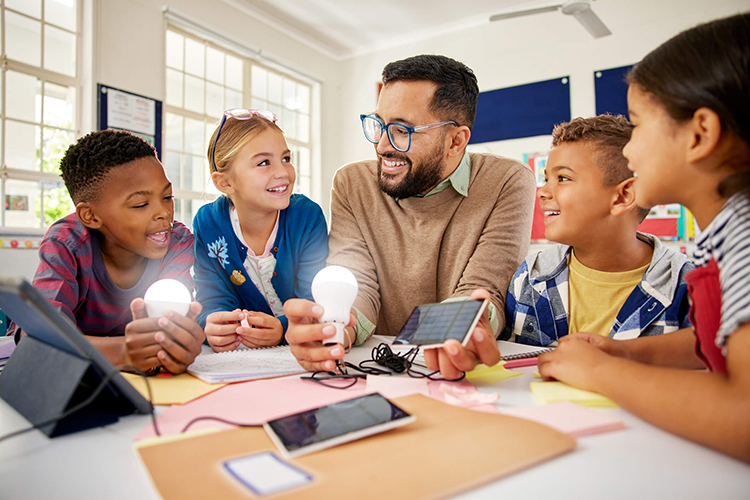




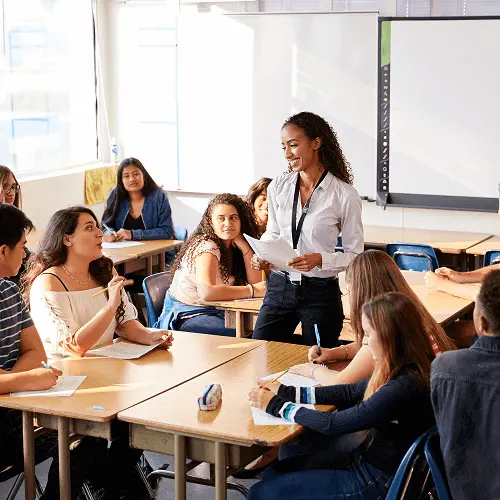
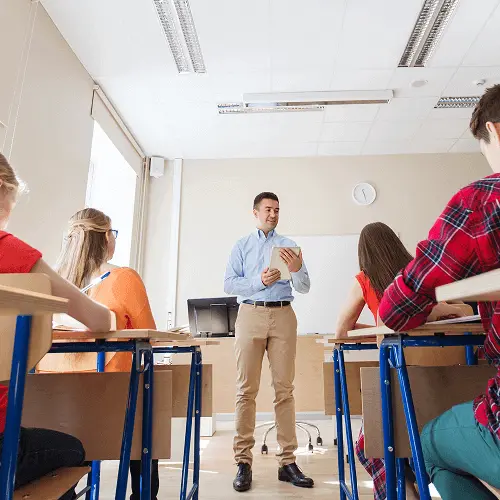


Summer Learning Labs (SLL) was launched in 2021 as a collaborative effort between The Mind Trust and the United Way of Central Indiana to address learning loss caused by the COVID-19 pandemic and provide access to high-quality summer learning to students who need access the most. Since its inception, pre- and post-tests for the Labs have shown double-digit percentage point learning gains, with notable 2025 results including a 25 percentage point increase in overall English Language Arts (ELA) and a 24 percentage point increase in overall math scores. Five years later, although in new circumstances, the program continues to thrive and has expanded into 37 cities across the state, with 145 sites serving over 12,000 students as of 2025.
2021: The Early Days
During the COVID-19 pandemic in 2021, The Mind Trust (TMT) and United Way of Central Indiana (UWCI) announced a joint investment of $500,000 to launch Indy Summer Learning Labs (ISLL), a transformative five-week program designed to boost learning and enrichment for Marion County students. The program received an additional $11.1 million in implementation funding support from the Indiana Department of Education through the state’s Student Learning Recovery Grant program, created by lawmakers in response to the pandemic. The initiative was built on existing efforts, such as TMT’s Community Learning Sites (CLS), and UWCI’s long-standing partnerships with youth-serving community organizations to mitigate learning loss caused by the COVID-19 pandemic. UWCI was the fiscal agent for the initiative and, alongside TMT, convened education partners to participate in the execution of the programs.
A key partner from the beginning has been Lavinia Group, a K12 Coalition company. They are a world-class education management consultancy that has provided ISLL (and now SLL) with a customized math and literacy curriculum aligned to Indiana’s academic standards, as well as robust professional development featuring Lavinia Group’s signature methods of Intellectual Preparation and Student Work Study. Recognizing that the limited timeframe of summer required depth over breadth on the student-side, they drew on their core components—Close Reading, Novel Study, and Story Problems—which they knew were highly effective instructional blocks in reaching students. At the same time, they adapted the curriculum to align with research on accelerating learning. On the professional development side, they leaned heavily on weekly meetings that focused on using student work to drive instruction. Their goal was to flip the narrative, helping teachers identify what students could do and use that as a springboard for progress.
Continue reading about the evolution of Summer Learning Labs on The Mind Trust.