

















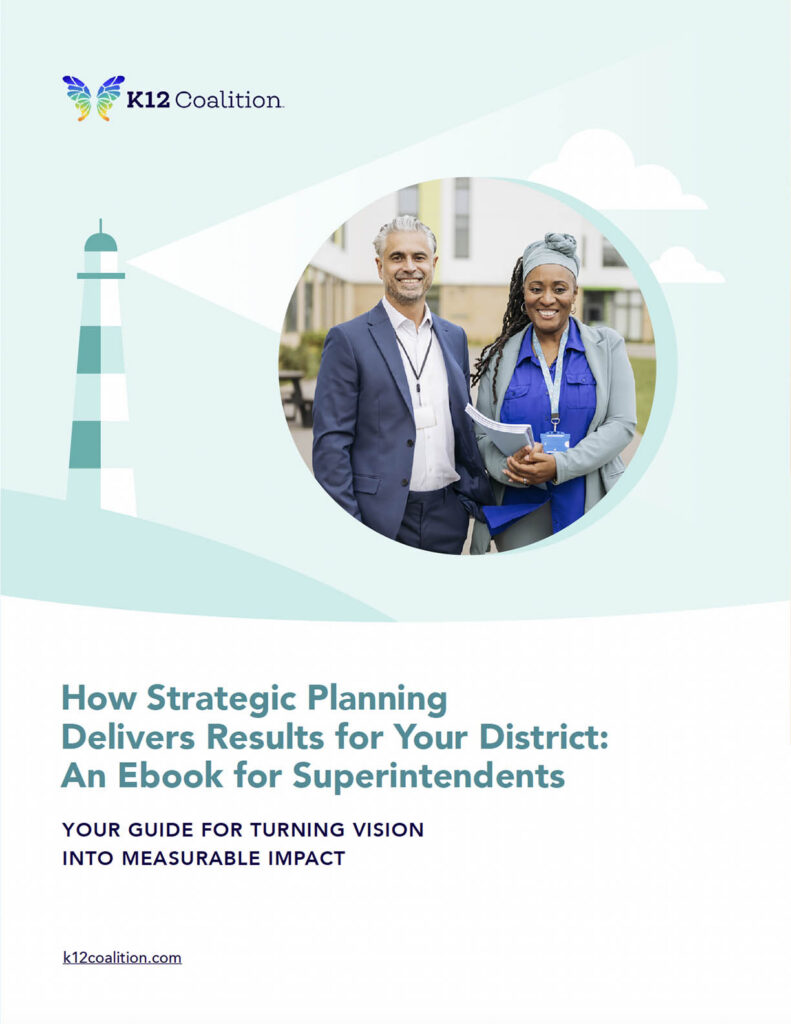
How Strategic Planning Drives Measurable Results for School Districts
School districts today are navigating increasing complexity. From tighter budgets and staffing challenges to rising accountability pressures and community expectations, district leaders are being asked to do more with less. Without a clear roadmap, even the most well-intentioned initiatives can become fragmented and ineffective.
That’s where strategic planning for school districts becomes essential.
The ebook highlights how districts can move from reactive decision-making to intentional, data-driven leadership that delivers measurable results for students, staff, and communities.
Why Strategic Planning Matters in Education
Strategic planning is more than a document. It is a system for aligning vision, resources, and action. As outlined in the ebook, districts without a clear strategic direction risk stalled progress, misaligned priorities, and reduced trust among stakeholders.
A well-designed district strategic plan helps leaders:
- Align budgets and resources to priority outcomes
- Build trust through transparency and community engagement
- Improve student outcomes through focused initiatives
- Create coherence across departments and schools
When districts take a structured approach, they shift from reacting to challenges to leading with clarity and purpose.
Turning Vision into Measurable Impact
One of the most powerful insights from the ebook is that strategic planning directly impacts measurable outcomes.
Research and real-world examples show that districts with strong strategic plans see improvements in:
Graduation Rates
Strategic initiatives such as dropout prevention, career pathways, and early college programs have increased graduation rates nationwide. Districts that align these efforts within a broader strategy see even stronger gains.
Stakeholder Trust
Trust is not a byproduct—it’s a strategy. Districts that actively gather feedback and engage families and communities build stronger relationships and better outcomes.
Teacher Retention
High turnover disrupts learning and increases costs. Strategic plans that prioritize teacher support, engagement, and leadership pathways help retain top talent.
Instructional Quality
Instructional quality is the most significant in-school factor affecting student achievement. Strategic planning ensures alignment between curriculum, professional development, and student goals.
What Makes a Strategic Plan Effective?
An effective education strategic planning framework includes several core components:
- Mission and Vision Statements that define purpose and direction
- Core Values that guide decision-making
- A Portrait of a Graduate that defines student success
- Strategic Priorities and Goals tied to measurable outcomes
- Data-driven benchmarks for tracking progress
The ebook emphasizes that strategic planning is not a one-time effort. It is an ongoing process that evolves with the district’s needs.
Strategic Planning in Action: Real District Impact
The ebook highlights real examples of districts transforming outcomes through strategic planning.
For example, Gainesville ISD moved from fragmented initiatives to a cohesive, actionable plan that:
- Increased alignment between classroom practices and district goals
- Improved stakeholder trust and transparency
- Created measurable benchmarks for continuous improvement
These results demonstrate how a data-driven strategic plan can turn vision into action and sustain long-term progress.
From Planning to Implementation
A strong district strategic planning process unfolds over time:
- Year 1: Stakeholder engagement and data analysis
- Year 2: Implementation of key initiatives
- Year 3+: Monitoring, refinement, and expansion
This phased approach ensures that strategic plans are not just created—but executed effectively.
Why District Leaders Choose Strategic Planning Partners
While some districts attempt to build plans internally, many benefit from expert guidance. As noted in the ebook, partnering with experienced advisors helps districts:
- Facilitate community engagement
- Identify root causes through data analysis
- Build actionable, measurable plans
- Accelerate implementation and results
Strategic planning is most effective when it combines internal insight with external expertise.
Final Thoughts: Turning Vision into Results
Strategic planning is how districts move from intention to impact. It creates alignment, builds trust, and ensures that every decision supports student success.
For district leaders ready to drive meaningful change, a strong strategic plan is not optional—it is essential.