


















In the late 1980s, the Biosphere 2 project sealed a team of scientists inside a self-sustaining miniature world. Their goal was to see if a closed system could support human life, serving as a potential blueprint for survival on Mars. A surprising phenomenon emerged: Once the trees inside the dome grew to a certain height, they simply toppled over. Scientists discovered the trees lacked “stress wood,” a crucial feature that develops only when a tree is exposed to the resistance of wind.
This same principle applies to education: If students never meet resistance from mistakes, they fail to develop the resilience necessary to achieve great growth. Mistakes are the “wind” that helps them grow strong in mathematical thinking and prepares them to stand in the face of the complex problems of the real world.
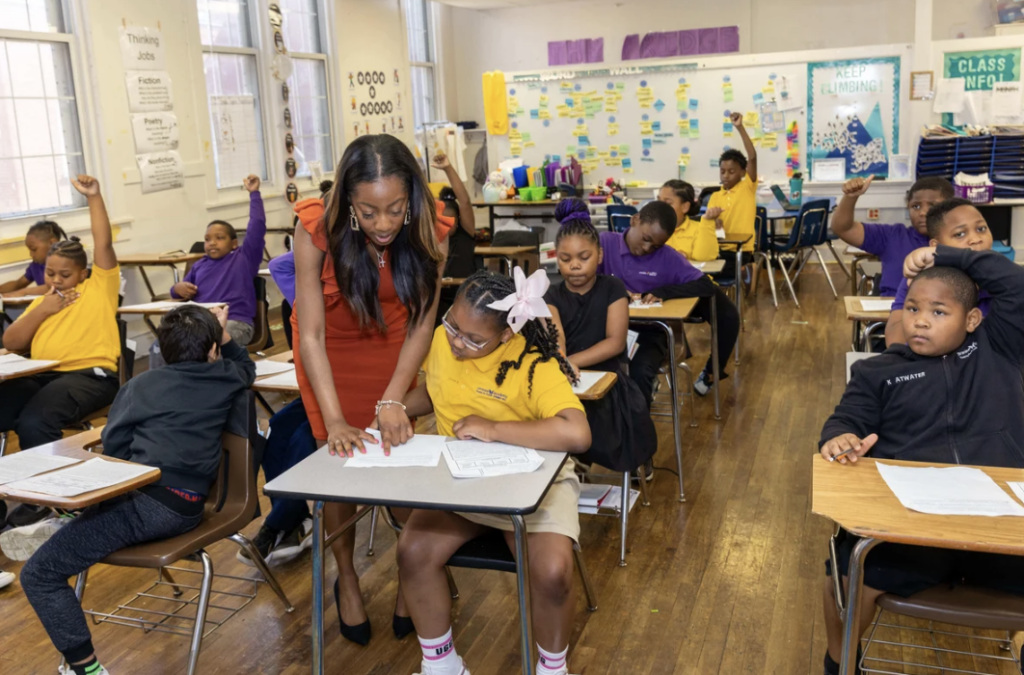
Across the United States, math scores are slipping, and anxiety about math is negatively affecting students as early as elementary school. I’ve watched students hesitate, doubt themselves, and disengage from a subject all over a mere mistake.
This mistake-celebrating approach we need instead begins with a shift in mindset. Too often, students believe that success in math is about being “naturally good” at it, which makes mistakes feel like evidence they don’t belong. A growth mindset flips that narrative, reframing mistakes as an essential part of learning. When teachers create a classroom culture that normalizes error-making and encourages students to analyze, discuss, and understand their missteps, mistakes can be powerful tools for learning.
Continue reading on Education Week.