
















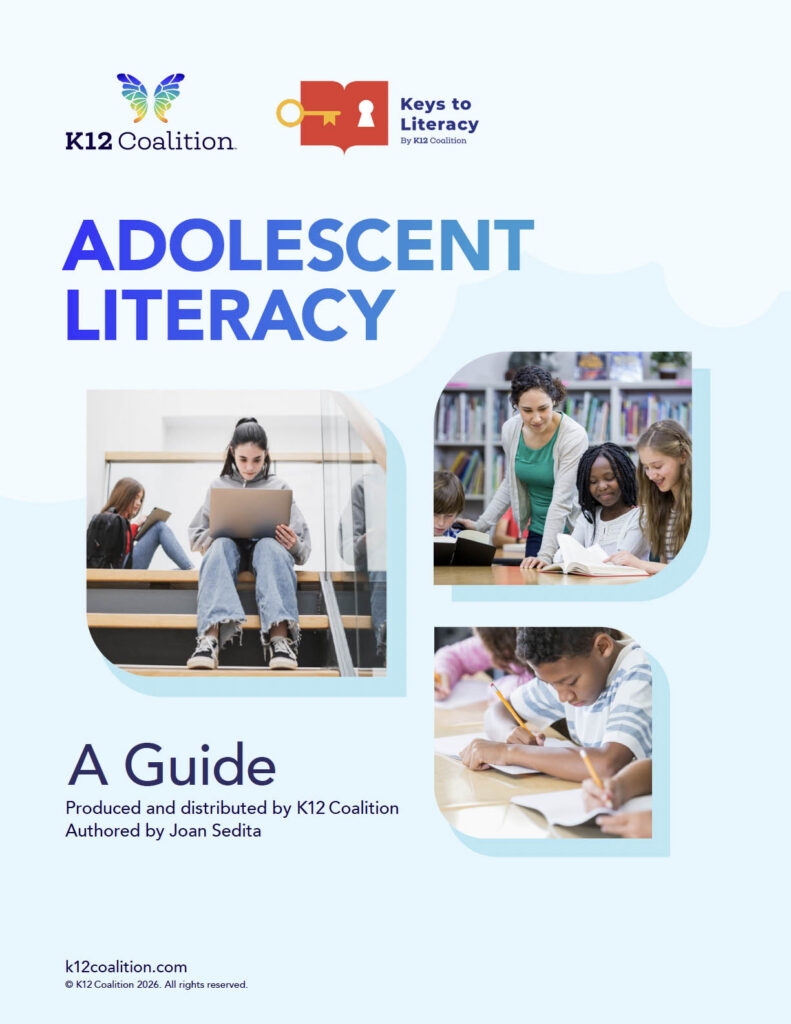
Why Adolescent Literacy Still Matters, And What Educators Can Do About It
If you work with students in grades 5 through 12, you already know that literacy doesn’t stop being a challenge once kids leave elementary school. What you might not realize is just how significant the gap is — and how much research now exists to help close it.
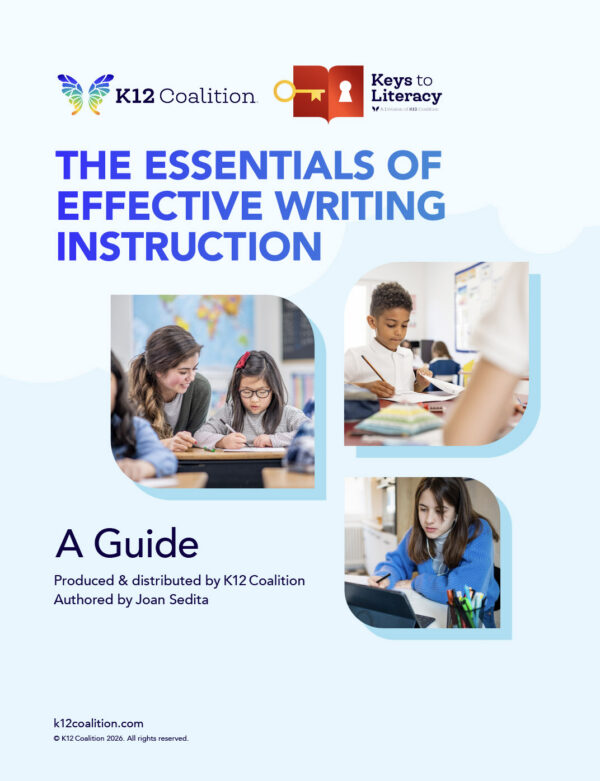
The Adolescent Literacy Guide from K12 Coalition, authored by Joan Sedita, founder of Keys to Literacy, is a concise, research-grounded resource that makes the case for why secondary literacy instruction deserves as much attention as early reading — and gives educators a clear framework for acting on that belief.
What the Guide Covers
The guide walks through the full landscape of adolescent literacy, from defining what it is and why it matters to practical instructional models, assessment strategies, and intervention frameworks. It introduces the three levels of literacy instruction — basic, content, and disciplinary — and explains how each plays a role in supporting all learners, not just those who are struggling.
It draws on decades of research, including data from national reading and writing assessments, showing that fewer than a third of students perform at proficiency in reading, and that writing scores are even more sobering. The guide frames these not as discouraging statistics, but as a call to action.
What Makes It Worth Reading
A few things set this guide apart from typical education resources. First, it bridges the gap between research and practice. Rather than presenting theory in isolation, it connects frameworks like the Simple View of Reading and the Writing Rope directly to what teachers and school leaders can do in classrooms today. Second, it addresses both reading and writing together — recognizing that the two are deeply connected and most effective when taught in an integrated way. Third, it doesn’t treat struggling students as a separate problem to be managed. It positions intervention as a natural, data-informed extension of strong core instruction for everyone.
The guide also devotes meaningful attention to school leadership, making the case that principals and department heads are not just administrators — they are literacy leaders whose decisions about systems, structures, and professional development directly shape student outcomes.
Who Should Download It
This guide is for middle and high school teachers who want research-backed strategies they can actually use; reading specialists and interventionists looking for a clear framework to guide their work; curriculum coordinators and instructional coaches building school-wide literacy plans; and principals who want to understand what high-performing literacy schools actually look like.
If you’ve ever wondered whether the literacy work you’re doing in secondary grades is grounded in the best available evidence, or if you’re looking for a starting point to build something stronger, this guide is an excellent place to begin.